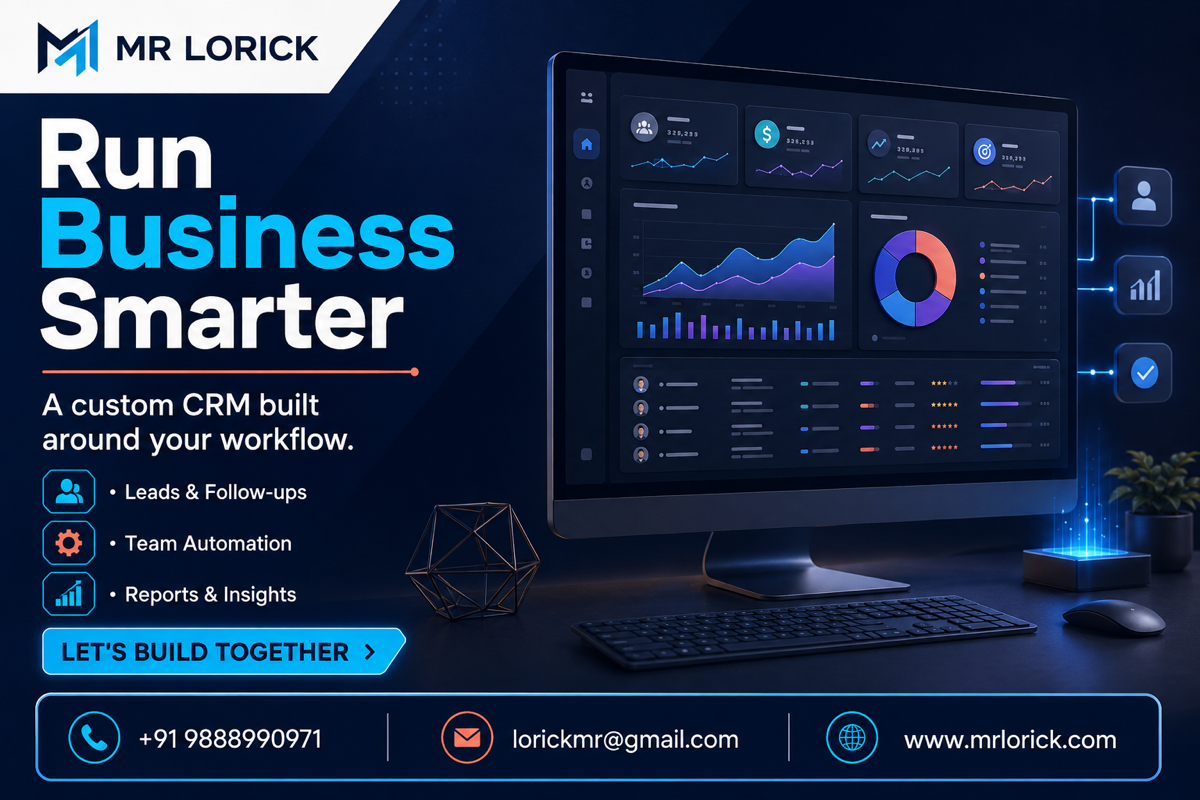
Every business works differently, so a generic CRM often creates extra steps. We design focused CRM systems around your real sales and operations flow, making adoption easier and follow-ups faster.
Observe the current workflow
Before designing modules, follow how leads arrive, who responds, where handoffs happen and which information is repeatedly requested. Existing spreadsheets and messages reveal the real operating model.
Model stages around decisions
Pipeline stages should represent meaningful progress, not internal jargon. Each stage needs an owner, a required outcome and a clear next action so reports reflect reality.
Reduce manual updates
Connect forms, email, calling tools and product activity where useful. Defaults, templates and automatic timestamps improve data quality without asking the team to become full-time record keepers.
Measure adoption and outcomes
Track active users, stale opportunities, response time and conversion by stage. These measures show whether the system improves customer work—not merely whether records exist.
Keep these three ideas.
- ✓Design from observed workflows
- ✓Make every stage actionable
- ✓Automate routine data capture