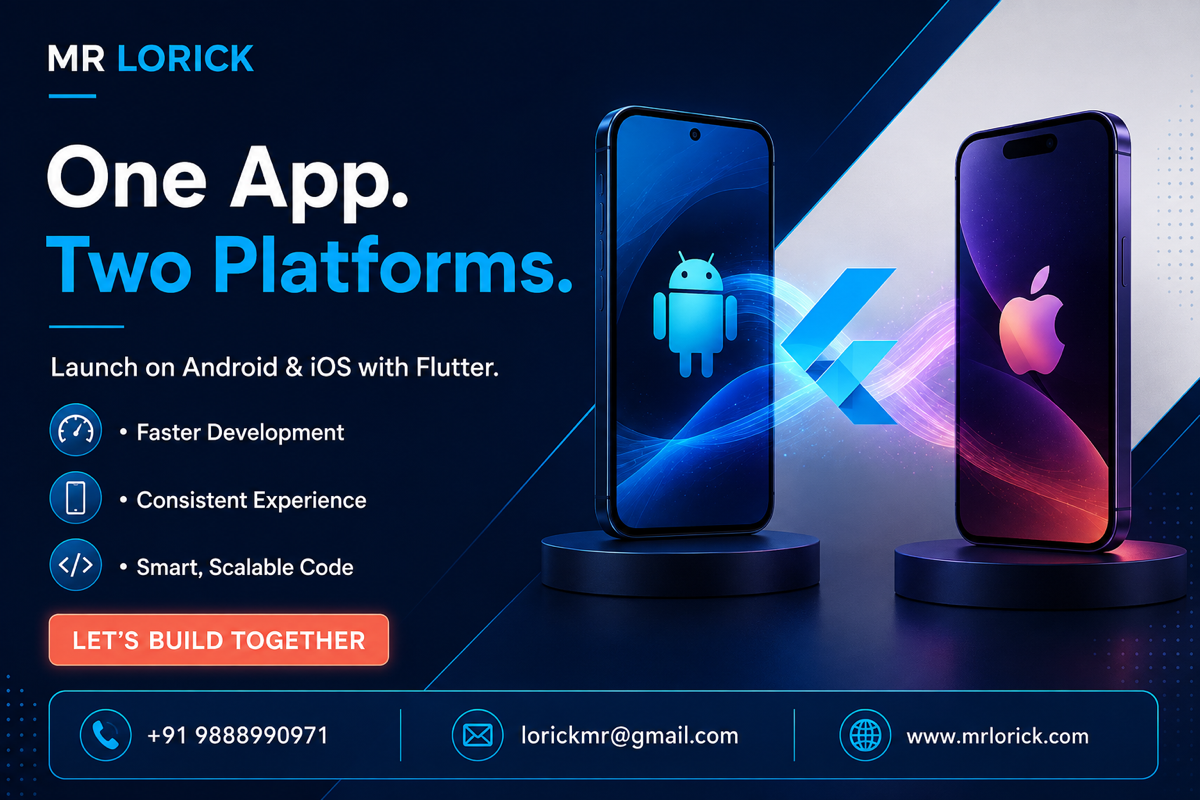
Flutter helps us deliver consistent Android and iOS apps from one focused codebase. For the right product, that means a faster launch, sensible cost and a polished experience across platforms.
When Flutter is a strong fit
Flutter is especially effective when Android and iOS need a consistent interface, a shared release rhythm and efficient feature delivery. One product team can iterate across both platforms without duplicating most UI work.
When native earns its cost
Native development is valuable for platform-specific experiences, deep operating-system integration, demanding background behavior or products where each platform intentionally follows its own conventions.
Compare ownership, not only launch cost
Consider hiring, test coverage, platform updates, third-party SDK support and the expected lifespan of the product. A quick first build is useful only when the team can confidently maintain it.
Make the decision with a technical spike
Prototype the highest-risk integration—video, maps, Bluetooth, payments or background work—before committing. Real evidence is more reliable than a framework comparison table.
Keep these three ideas.
- ✓Choose for the product constraints
- ✓Include maintenance in the estimate
- ✓Prototype the riskiest capability